
Tips
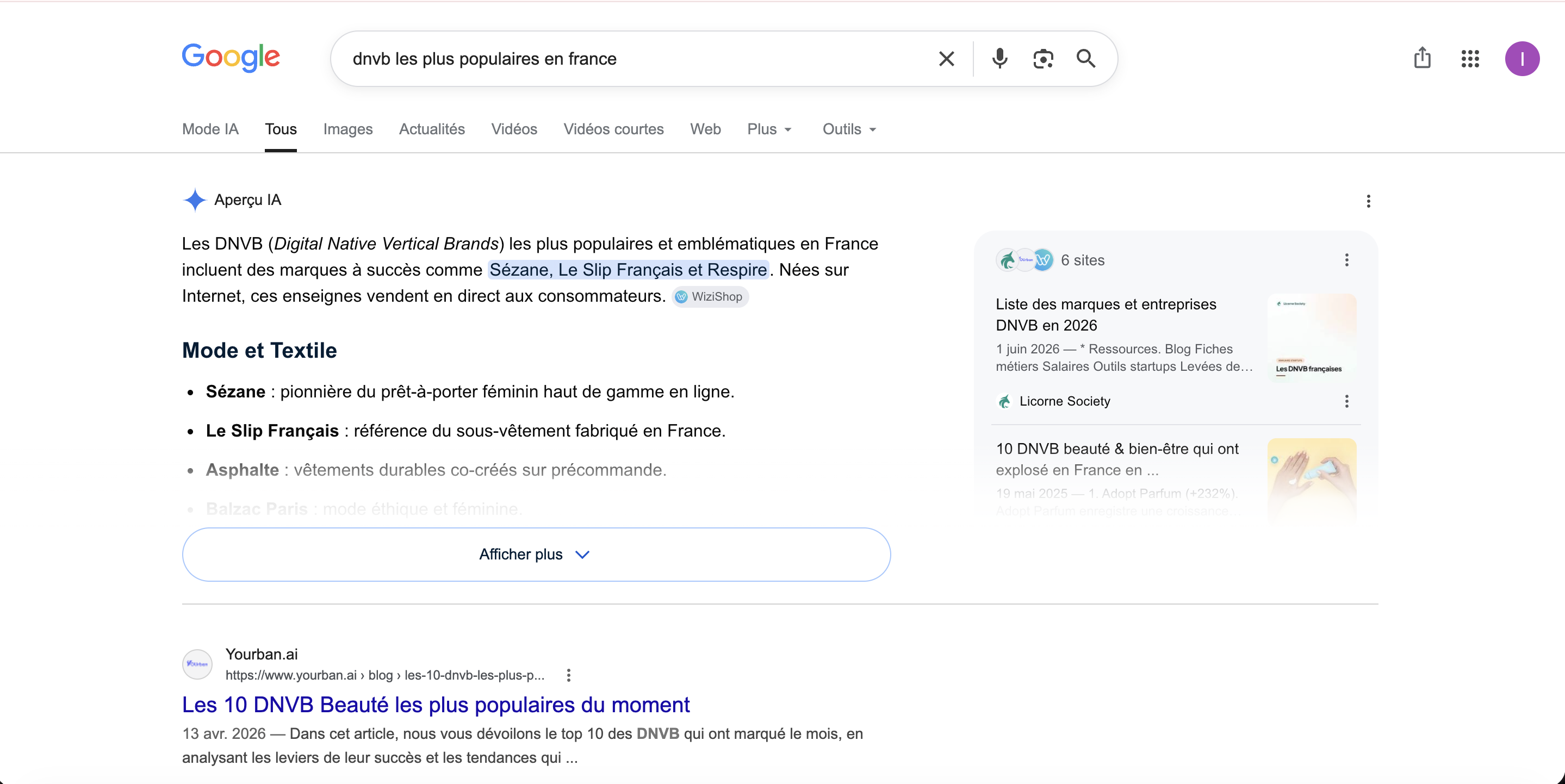
On July 22, 2026, Google officially launched AI Overview in France. This new feature is changing the way people use Google—and the way businesses need to approach their online visibility.
So, what exactly is AI Overview? Is it good news or bad news? And how can you adapt? Here's a simple guide to help you understand everything.
AI Overview is an AI-generated summary created by Google's artificial intelligence model, Gemini, that appears at the top of Google search results.
Instead of displaying only a list of websites, Google can now answer your question directly in a few sentences while citing multiple sources.
You searched for:
"How do you choose a commercial space?"
Google displayed a list of links:
You had to open several pages to find your answer.
For the same search, Google may display:
A summary explaining the main criteria for choosing a commercial space, along with links to the websites used to generate the response.
The links are still there—but they now appear below the AI-generated summary.
Google doesn't display AI Overview for every search.
In general, it appears when a query:
On the other hand, for a simple search such as:
"Nike"
Google will often continue to display traditional search results.
The goal is simple: help users get answers faster without having to visit multiple websites.
Google wants search to become more conversational, similar to interacting with an AI assistant.
Users can then ask follow-up questions directly beneath the AI Overview to explore the topic in greater depth.
This is probably one of the biggest changes for content creators in recent years.
Google primarily directed users to websites.
Google answers the question first—and then suggests links for users who want to learn more.
Some websites may receive fewer clicks, while others could gain more visibility if they are cited in AI Overview.
Today, ranking first on Google is still important.
Tomorrow, however, businesses will also need to become a trusted source that Google's AI chooses to reference.
When a website is cited in AI Overview, its content can appear directly in Google's AI-generated response.
In other words, being visible no longer means simply ranking at the top of search results—it also means being selected by Google's AI.
Google hasn't published an official formula, but several best practices are already emerging.
AI prefers content that is simple and easy to understand.
Instead of writing long paragraphs, provide concise and direct answers.
Use:
This makes it easier for Google to understand your content.
Content that includes data, statistics, or credible sources is more likely to be referenced.
Google tends to favor recent content when it provides more current information.
If you already have published articles, make sure to update them regularly.
Not necessarily.
Some websites may see a decline in traffic for informational searches.
However, AI Overview continues to cite websites, creating a new opportunity to increase visibility. Several studies also suggest that AI-generated answers can reduce clicks on traditional search results, encouraging businesses to rethink their SEO strategies.
The arrival of AI Overview marks a new era for search engine optimization. It is no longer enough to rank highly on Google—you also need to create content that is clear, concise, and trustworthy.
SEO is no longer just about appearing at the top of search results. It's also about becoming a trusted source for Google's artificial intelligence. By adapting your strategy today, you'll improve your chances of being visible in the searches of tomorrow.

Tips
May 19, 2025

Trends
May 19, 2025

Trends
May 19, 2025
.png)

